






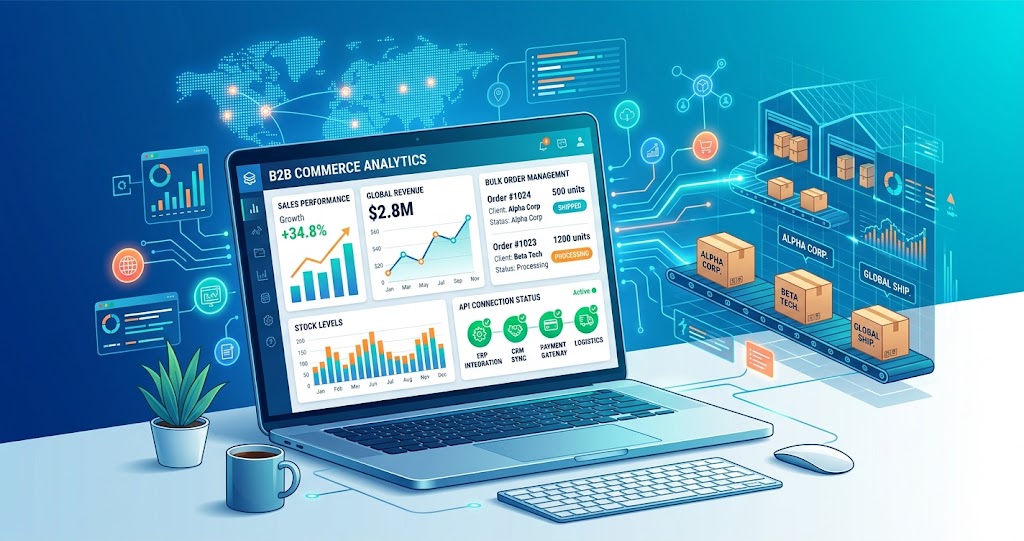
BigCommerce for B2B Sales in 2026: Features, Strategy & Growth Guide
How to Leverage BigCommerce for B2B Sales in 2026
The B2B ecommerce landscape is evolving rapidly. In 2026, simply having an online product catalog is no longer enough. Buyers now expect the same smooth and fast digital experience they get from B2C platforms, including personalized pricing, quick reordering, real-time inventory visibility, and seamless checkout.
At the same time, more than 80% of B2B transactions are now happening online, which means businesses that fail to modernize their sales process risk falling behind competitors.
Platforms like BigCommerce are helping companies adapt to this shift by offering built-in B2B capabilities, flexible integrations, and scalable infrastructure. Whether you are a manufacturer, wholesaler, or distributor, BigCommerce allows you to create a powerful digital commerce ecosystem that simplifies operations and improves the buyer experience.
In this guide, we explore how businesses can leverage BigCommerce for B2B ecommerce success in 2026.
Why BigCommerce is Gaining Momentum in B2B Ecommerce
Traditionally, B2B sales relied heavily on manual processes such as emails, phone calls, spreadsheets, and sales representatives. However, modern B2B buyers now prefer self-service purchasing and faster online experiences.
BigCommerce supports this shift with features such as:
- Custom pricing and customer groups
- Bulk ordering capabilities
- Flexible product catalog management
- Seamless ERP and CRM integrations
- Scalable infrastructure for high-volume transactions
These capabilities help businesses automate operations, reduce manual work, and improve purchasing efficiency.
1. Enable Self-Service Buying with Customer Portals
In 2026, B2B buyers prefer self-service purchasing instead of waiting for quotes or manual approvals.
BigCommerce allows businesses to create a buyer portal where customers can manage their own accounts and orders.
Key capabilities include:
Customer Account Management
Businesses can allow buyers to create multiple user roles within their organization, such as purchasing managers, finance teams, and administrators.
Order History and Reordering
Customers can quickly reorder previous purchases, saving time and simplifying procurement.
Invoice and Credit Management
Buyers can track invoices, review payment history, and manage credit terms like Net-30 or Net-60.
This self-service approach improves customer satisfaction while freeing sales teams to focus on strategic growth and relationship building.
2. Deliver Personalized Pricing for Every Customer
Pricing in B2B commerce is rarely fixed. Different clients often receive custom pricing based on contracts, order volume, or long-term relationships.
BigCommerce makes this easy through customer groups and price lists.
Businesses can provide:
- Negotiated pricing for specific customers
- Volume-based discounts
- Exclusive product catalogs for selected distributors
- Region-specific pricing
When customers log into the store, they automatically see their own pricing and product availability, creating a personalized buying experience.
This level of personalization is becoming a standard expectation in modern B2B ecommerce.
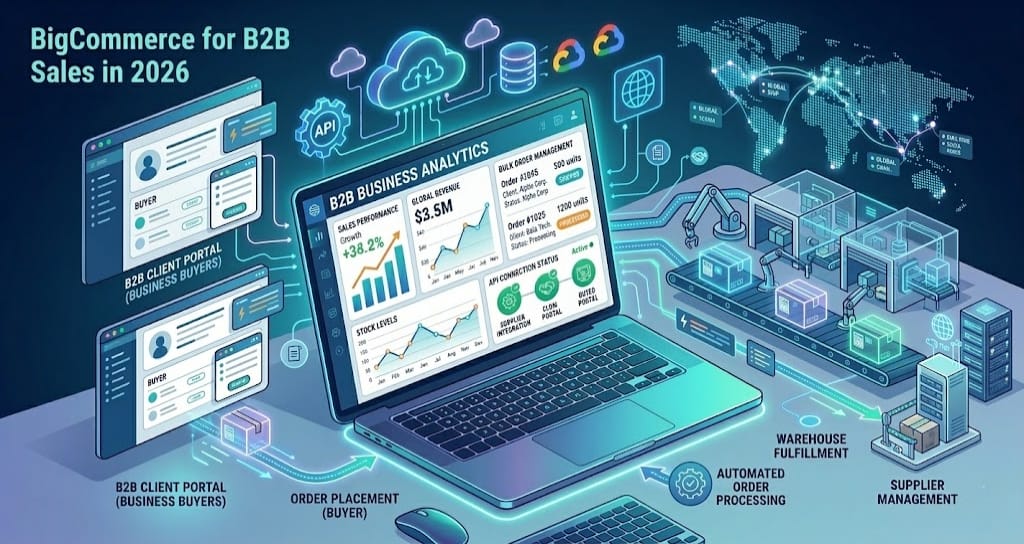
3. Simplify Bulk Ordering for High-Volume Buyers
Unlike traditional online shoppers, B2B customers often purchase large quantities of products at once.
BigCommerce provides tools that make bulk ordering faster and easier.
Quick Order Tools
Buyers can enter product SKUs directly or upload product lists to add items to their cart instantly.
Bulk Reordering
Procurement teams can reorder their frequently purchased products with just a few clicks.
Real-Time Inventory Visibility
Customers can see accurate product availability, helping them plan purchases and avoid delays.
These capabilities reduce friction and make the ordering process much more efficient for business buyers.
4. Integrate BigCommerce with ERP, CRM, and Business Systems
Integration is a critical component of modern B2B ecommerce platforms.
Most businesses rely on systems such as:
- ERP software
- CRM platforms
- Inventory management tools
- Accounting systems
BigCommerce offers powerful APIs and integration flexibility, allowing businesses to connect their ecommerce store with these internal systems.
Benefits include:
- Real-time inventory synchronization
- Automated order processing
- Accurate customer and product data
- Improved operational efficiency
In 2026, connected commerce systems are essential for scaling B2B operations.
5. Improve User Experience to Increase Conversions
User experience plays a significant role in B2B ecommerce success. Buyers expect websites that are easy to navigate, fast, and mobile-friendly.
To maximize conversions, businesses should focus on:
- Clear product categories
- Detailed product specifications
- Fast search functionality
- Mobile-optimized design
- Simple checkout process
A well-designed BigCommerce B2B store can significantly improve engagement and reduce purchasing friction.
6. Scale Your B2B Business with Reliable Infrastructure
As B2B ecommerce grows, businesses need platforms that can handle:
- Large product catalogs
- High website traffic
- Complex pricing structures
- Secure transactions
BigCommerce is built on cloud-native architecture, ensuring:
- High website performance
- Reliable uptime
- Secure transactions
- Scalability for enterprise businesses
This reliability is especially important for companies managing large volumes of B2B transactions.
The Future of B2B Ecommerce with BigCommerce
In 2026, the line between B2B and B2C experiences continues to blur. Business buyers expect the same convenience, speed, and personalization they experience in consumer shopping.
BigCommerce is well-positioned to support this evolution with its flexible architecture, strong API ecosystem, and advanced B2B features.
Companies that adopt modern ecommerce strategies today will be better prepared to compete in the increasingly digital B2B marketplace.
Conclusion
BigCommerce provides a powerful platform for businesses looking to modernize their B2B ecommerce strategy.
With features like custom pricing, bulk ordering, self-service buying, ERP integrations, and scalable infrastructure, businesses can streamline operations and deliver a better purchasing experience for their customers.
By leveraging BigCommerce effectively, organizations can increase efficiency, improve customer satisfaction, and unlock new opportunities for long-term growth.
If your company is planning to build or optimize a BigCommerce B2B store, partnering with experienced ecommerce developers can help ensure your platform is designed for performance, scalability, and future success.
